
Inspired by trade publishers and pricing platforms, the new identity treats every story as a signal in the value chain.
Independent chemical intelligence desk
Global Chemical News
An independent chemical industry desk built for pricing signals, capacity shifts, regulation, materials innovation, and plant-level risk.
916 archive signals
26 tracked lanes
Updated September 20, 2026
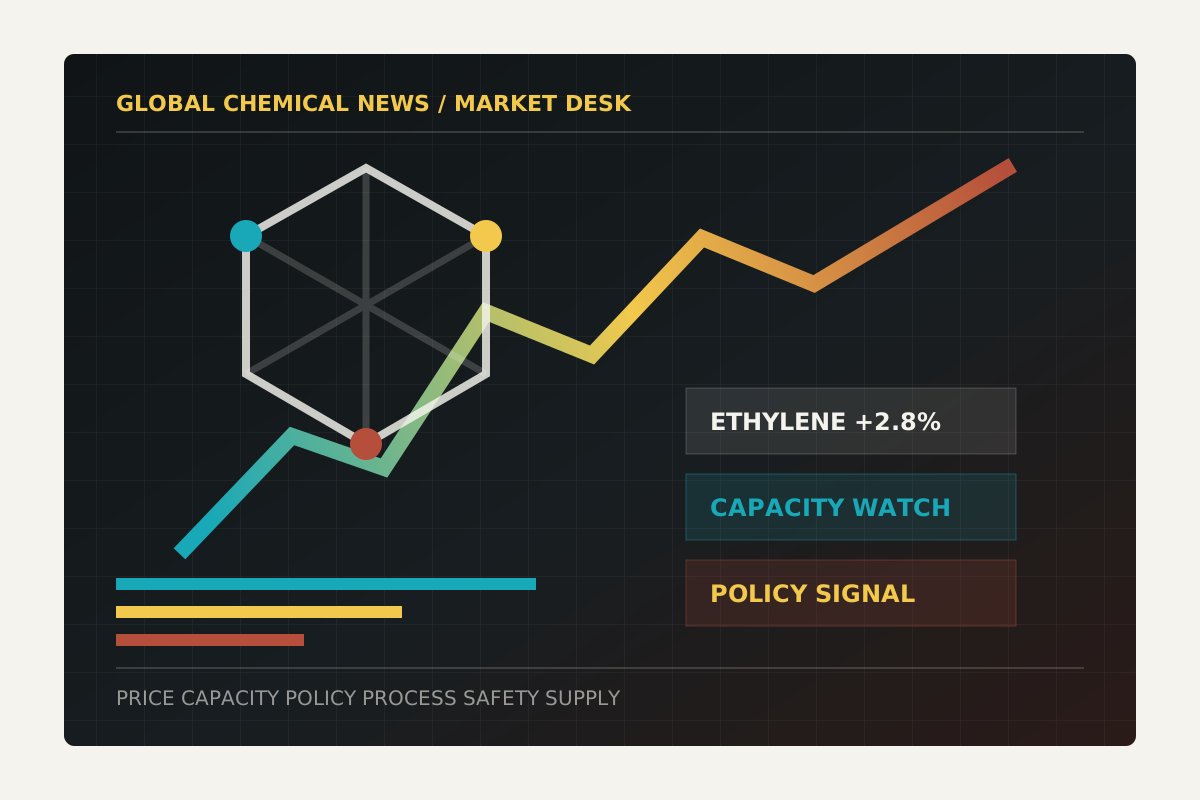
The palette borrows from instrument panels, lab labels, regulatory documents, and industrial warning systems.
The new mark connects chemical structure with movement, making it usable as a favicon, stamp, and publication badge.
Market lanes
Coverage organized around the decisions chemical readers make.
The site now presents the archive like a desk product: market movement, process change, policy risk, and downstream demand.
132 stories
Chemical Industry News
Breaking updates on companies, capacity changes, market moves, and policy shifts across the chemical sector.
110 storiesChemical Applications
Where chemical products are used in real-world systems, from manufacturing and coatings to water and materials.
96 storiesChemical Research and Innovation
New materials, process development, lab advances, and the R&D work shaping what comes next.
82 storiesChemical Analysis and Services
Testing, laboratory services, analytics, and specialist support used by manufacturers and suppliers.
66 storiesCommodity Chemicals
Bulk chemicals, feedstocks, margins, logistics, and the supply side of the industry.
60 storiesIndustrial Applications
Manufacturing uses across coatings, adhesives, polymers, and process chemistry.
Latest signals
Recent stories are framed as market signals, not loose blog posts.
Every story carries the same brand stamp and placeholder artwork until final newsroom images are added.
Warehouse Automation Needs Chemical-Grade Segregation Rules
Automated storage and retrieval systems move chemical inventory faster, but only when compatibility, containment, and hazard class rules are built into the picking logic itself.
Additive Qualification Needs Substrate-Matched Evidence
A performance additive that works in one formulation can fail in another. Qualification data only counts when it is matched to the actual substrate and process.
Export Documentation Determines Whether Chemical Supply Actually Moves
A confirmed order does not move chemical product across a border. Classification, licensing, and shipping paper are the steps that decide whether supply actually arrives.
Discharge Permits Set the Real Ceiling on Chemical Plant Output
Nameplate capacity means little when a wastewater discharge permit caps the volume or concentration a chemical plant can actually release. The permit, not the equipment, is often the binding constraint.
Contract Manufacturing Capacity Claims Need a Batch-Level Check
A toll manufacturer's stated capacity is not the same as available capacity for a new customer's specific chemistry, batch size, and quality requirement.
Field Trial Results Need a Site-Specific Reading, Not a Headline Yield
A crop protection or agrochemical field trial result from one region does not transfer automatically to a different soil type, climate, or pest pressure.
Brand kit
The identity now reads like an industrial intelligence product.
The system combines an editorial masthead, market-data cues, chemical structure, and high-contrast operating colors. It is designed to feel credible beside established trade publications while still being ownable.
Placeholder images are built into the article cards and page heroes so the site remains visually complete before final newsroom images are added.
Brand pages
Company pages now carry the same market-desk identity.
These routes are ready for your final contact details, media kit, ownership language, and legal copy.
Page
About us
What the publication covers and how it is structured.
PageBrand story
Logo, palette, tone, and the identity rules behind the rebuild.
PageEditorial policy
How stories are sourced, edited, and corrected.
PagePublish for us
Submission guidance for contributors and partners.
PageAdvertise with us
Placeholder media-kit page for future sponsorships.
PageContact us
Replace the placeholder contact details with your own.